← Home · Foundations

Shallow Foundation Design for Sonoma County Soils

Together, we solve the challenges of tomorrow.

LEARN MORE →

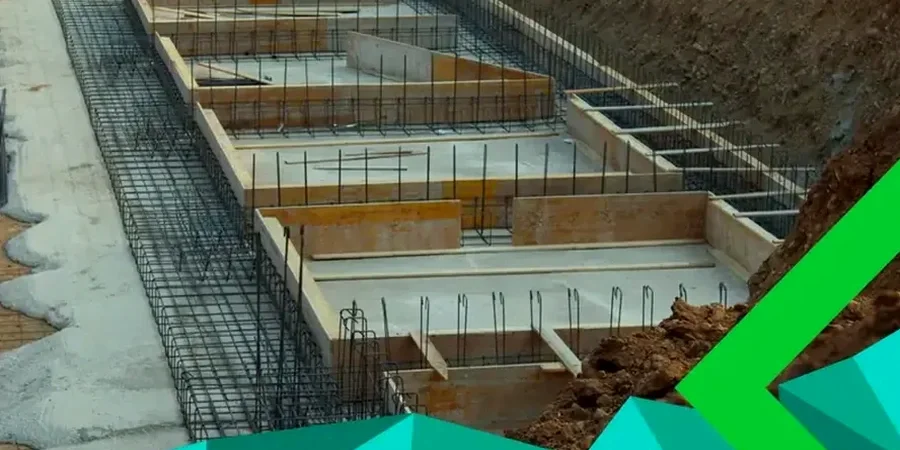
A three-story mixed-use building on Fourth Street hit refusal at 4 feet. Solid bedrock, or so the contractor thought. Our investigation revealed weathered Franciscan Complex melange. The original spread footing design wouldn't work. We redesigned the shallow foundation system using a reinforced mat to bridge the erratic rock. This is Santa Rosa: you never know exactly what you'll find until you open the ground. We combine local drilling experience with CPT testing to map these transitions before excavation begins. For sites near Santa Rosa Creek, where alluvial deposits dominate, we often integrate triaxial testing to confirm shear strength parameters under saturated conditions. Every shallow foundation in Santa Rosa must account for these sudden stratigraphic changes.

Bearing capacity in Santa Rosa is rarely the limiting factor. Differential settlement across mixed alluvial and bedrock profiles is what keeps engineers up at night.

Methodology and scope

Santa Rosa sits at 164 feet elevation, but the real story is the variation. The 1969 earthquakes reshaped our building codes, and the 2014 South Napa quake reminded everyone why we overdesign. A shallow foundation here isn't a standard detail. We design strip and pad footings for the clay-rich soils east of Highway 101, and mat foundations for the alluvial corridors. Lateral bearing capacity governs many Santa Rosa designs due to high seismic demand. We verify this with plate load testing on critical projects. Soil classification per ASTM D2487 drives every calculation. Bearing pressures vary from 1,500 psf in soft clay to over 4,000 psf on dense gravel. We don't guess. We test.
Shallow Foundation Design for Sonoma County Soils
Technical reference image — Santa Rosa

Site-specific factors

ASCE 7-22 and the California Building Code don't treat Santa Rosa lightly. Much of the city lies within Seismic Design Category D, with liquefaction potential mapped along the Santa Rosa Plain. Missing a lens of saturated sand under a proposed spread footing isn't just a code violation. It's a structural failure waiting for the next Hayward-Rodgers Creek rupture. Expansive soils east of town add another layer of risk. We've pulled cores from shallow foundations in Rincon Valley that showed 3 inches of clay heave. That's a slab-on-grade failure. Our shallow foundation design specifically addresses both bearing capacity failure and excessive settlement through targeted investigation.

Need a geotechnical assessment?

Reply within 24h.

Email: contact@geotechnicalengineering.biz

Technical data

ParameterTypical value
Typical bearing pressure (dense gravel)3,500 - 5,000 psf
Typical bearing pressure (stiff clay)1,500 - 2,500 psf
Minimum footing depth (expansive zones)18 inches per CBC
Seismic design categoryD or E per ASCE 7-22
Factor of safety (static)3.0 per IBC Section 1806
Settlement tolerance (residential)1 inch total, 3/4 inch differential
Key geotechnical report sectionAllowable foundation pressure and anticipated settlement

Other technical services

01

Residential Foundation Design

Spread footings and post-tensioned slabs for single-family homes on Santa Rosa's expansive clays. We handle hillside setbacks and creek setback requirements.

02

Commercial Mat and Raft Design

Large-footprint shallow foundations for tilt-up warehouses and retail centers. We model soil-structure interaction to keep differential settlement below 1/2 inch.

Relevant standards

ASCE 7-22 Minimum Design Loads, IBC 2021 Chapter 18 Soils and Foundations, ASTM D1586 Standard Penetration Test, ASTM D2487 Soil Classification, CBC 2022 Section 1806 Presumptive Load-Bearing Values

Questions and answers

What factors drive shallow foundation design in Santa Rosa?

Three factors dominate: seismic shaking potential, expansive clay behavior, and variable bedrock depth. The Franciscan Complex creates unpredictable refusal surfaces. We run consolidation tests on all cohesive samples to predict settlement. Liquefaction screening is standard for sites within the Santa Rosa Plain mapped zone.

What does a typical shallow foundation investigation cost in Santa Rosa?

For a standard residential lot, expect US$1,820 to US$3,280 depending on access, depth, and number of borings. Commercial projects typically run higher due to deeper drilling and laboratory testing requirements.

How many borings are needed for a shallow foundation design?

IBC 2021 requires at least one boring per 1,600 square feet for structures under 100 feet. We usually exceed that in Santa Rosa. Variable geology demands tighter spacing. A typical single-family lot needs two borings to 15 feet minimum.
Location and service area

We serve projects in Santa Rosa and surrounding areas.

View larger map