← Home · In-Situ Testing

In-Situ Permeability Testing in Santa Rosa: Lefranc and Lugeon Methods

Together, we solve the challenges of tomorrow.

LEARN MORE →

Compliance with the International Building Code (IBC) and ASCE 7 requires accurate subsurface hydraulic conductivity data before breaking ground in Sonoma County. In Santa Rosa, where alluvial deposits meet volcanic bedrock, guessing permeability is a costly risk. Our team executes in-situ Lefranc and Lugeon tests to deliver the precise data your geotechnical report needs. We don't rely on lab estimates alone; we measure how water actually moves through the specific strata under your site. A CPT test can map stratigraphy, but only a direct permeability measurement confirms flow rates critical for dewatering design. Our ISO 17025 accredited laboratory processes the readings, ensuring every value meets ASTM D6391 standards for defensible engineering decisions.

A Lugeon test in fractured bedrock tells you more about groundwater movement in ten minutes than a dozen lab permeability tests on intact samples.

Methodology and scope

Santa Rosa sits on a complex interface of the Santa Rosa Plain's Quaternary alluvium and the rugged Sonoma volcanics of the Mayacamas Mountains. This geology creates highly variable permeability zones: sandy gravels can transmit water rapidly, while underlying clay layers or weathered tuff may form aquitards. When we run a Lugeon test in fractured rhyolite on a hillside project, we often see dramatic pressure drop-offs that lab tests on intact cores would miss. The Lefranc method, meanwhile, excels in the alluvial valley where maintaining a constant head in granular materials reveals the true drainage capacity. Understanding this contrast is essential for designing retention systems and predicting settlement timelines.
In-Situ Permeability Testing in Santa Rosa: Lefranc and Lugeon Methods
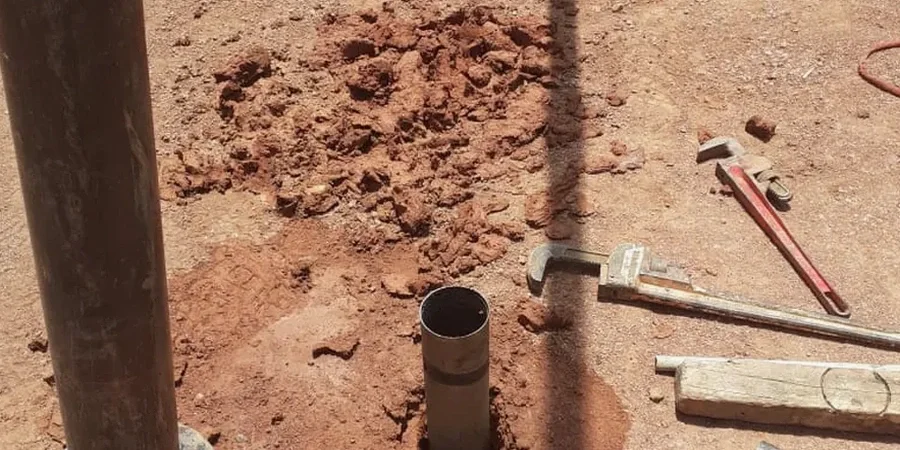
Technical reference image — Santa Rosa

Site-specific factors

Our field crews arrive with a truck-mounted drill rig equipped with pneumatic packers and calibrated flow meters. For a Lugeon test in the hills east of Santa Rosa, we isolate a specific fracture zone by inflating the packer and injecting water under staged pressures. The gauge tells a story instantly: laminar flow, turbulent flow, or hydraulic fracturing. Misreading these signals can lead to underestimating grout takes or overestimating dewatering pump sizes. The biggest hazard on site isn't the equipment—it's the false confidence from a poorly executed test. We have seen projects where a skipped in-situ test led to excavation flooding when a hidden gravel lens was missed by standard SPT sampling alone.

Need a geotechnical assessment?

Reply within 24h.

Email: contact@geotechnicalengineering.biz

Technical data

ParameterTypical value
Test MethodLefranc (Constant/Falling Head), Lugeon (Packer Test)
Geologic Application in Santa RosaAlluvial sands and gravels (Lefranc); Fractured volcanics and bedrock (Lugeon)
Measurement Range10^-7 m/s to 10^-3 m/s, depending on soil/rock mass conditions
Standard ReferenceASTM D6391 for borehole tests; USBR Earth Manual designations
Borehole DiameterTypically NQ (75mm) for Lugeon; 100-150mm for Lefranc in gravels
Test Depth CapabilityUp to 100 feet below grade with truck-mounted drill rigs
Reporting MetricsLugeon values (1 Lu ≈ 1.3x10^-7 m/s) or hydraulic conductivity (cm/s)

Other technical services

01

Lugeon Test (Packer Test) for Rock Masses

Designed for fractured bedrock typical of the Sonoma volcanics. We isolate borehole sections with a pneumatic packer and inject water at up to 5 pressure stages. This measures the hydraulic conductivity of discrete fractures, providing a Lugeon value that guides grouting programs, slope stability analysis, and tunnel leakage assessments.

02

Lefranc Test for Soils

Ideal for the alluvial and colluvial soils of the Santa Rosa Plain. We conduct constant-head or falling-head tests within a cased borehole. This method directly determines the permeability of granular soils, providing the essential data for dewatering system sizing, infiltration basin design, and settlement rate calculations.

Relevant standards

ASTM D6391: Standard Test Method for Field Measurement of Hydraulic Conductivity Using Borehole Infiltration, IBC Section 1803: Geotechnical Investigations, ASCE 7: Minimum Design Loads and Associated Criteria for Buildings and Other Structures, USBR 6510: Permeability Tests in Boreholes

Questions and answers

What's the difference between a Lugeon and a Lefranc test?

The Lugeon test is a packer test for fractured rock. It isolates a specific section of the borehole and subjects it to water pressure to measure rock mass permeability. The Lefranc test is for soils, typically installed below a casing, and measures the permeability of the soil matrix itself using a constant or falling head method. In Santa Rosa, we use Lugeon in the hillside bedrock and Lefranc in the valley floor alluvium.

How long does a field permeability test take on site?

A single Lefranc test in soil typically requires about 1 to 2 hours of field time once the borehole is advanced to the target depth. A Lugeon test in rock with a full five-stage pressure cycle usually takes 1.5 to 2.5 hours per test interval. The total duration depends on the number of test depths required by the project specifications.

What does a permeability test cost in Santa Rosa?

The cost for a single in-situ permeability test in Santa Rosa generally ranges from US$670 to US$1,010, depending on the depth of the test interval and whether it's a Lefranc or Lugeon method. This includes the mobilization of the drill rig, the testing equipment, and the engineering analysis report. A full-day testing program with multiple intervals will be priced based on the specific scope of work.

Why can't I just use lab permeability tests on core samples?

Lab tests on small intact samples miss the macro-features that control groundwater flow—fractures, fissures, and gravel lenses. A rock core might look solid but the rock mass could have open joints with high permeability. In granular soils, it's nearly impossible to collect an undisturbed sample that truly represents the in-situ density. The Lugeon and Lefranc tests measure the bulk permeability of the formation as it exists in place, which is far more representative for dewatering and drainage design.
Location and service area

We serve projects in Santa Rosa and surrounding areas.

View larger map