← Home · Slopes & Walls

Slope Stability Analysis in Santa Rosa, California

Together, we solve the challenges of tomorrow.

LEARN MORE →

Santa Rosa's population has grown to over 175,000, pushing development further into the foothills of the Mayacamas Mountains and Sonoma Mountain. Any cut deeper than four feet in these uplifted Franciscan Complex formations demands a rigorous look at soil cohesion. The 2017 Tubbs Fire stripped vegetation from thousands of acres, and the following winter rains triggered shallow failures in saturated, root-decayed colluvium across Fountaingrove and Rincon Valley. A slope stability analysis here is not a generic calculation — it must account for weathered mélange, seasonal groundwater perched on claystone lenses, and seismic demands from the Rodgers Creek Fault. The team runs limit equilibrium models using Spencer's method to match real field behavior, then cross-checks with in-situ permeability data when seepage is driving the factor of safety downward.

A slope that stood for 10,000 years can fail in one winter if the drainage assumptions are wrong.

Methodology and scope

Soil profiles shift dramatically between the flat Santa Rosa Plain and the hills east of Calistoga Road. On the valley floor, Young Alluvium with interbedded silts and clays can host artesian conditions that complicate toe stability. Up in the Bennett Valley, residual soils derived from Sonoma Volcanics often retain a stable matrix suction until a heavy atmospheric river saturates the upper six feet. The analysis workflow includes SPT borings to sample the failure plane, triaxial testing for effective stress parameters, and back-analysis of existing landslides to calibrate input strength. When a developer needs to prove that a 40-foot cut will remain stable under a 2,475-year seismic event, the report integrates seismic refraction profiles to map the bedrock surface and identify velocity contrasts that could amplify shaking.
Slope Stability Analysis in Santa Rosa, California
Technical reference image — Santa Rosa

Site-specific factors

A track-mounted CME-75 drill rig mobilized to a Santa Rosa hillside lot encounters conditions that direct-push rigs cannot handle: serpentinite blocks floating in a sheared shale matrix. The crew advances hollow-stem augers through the active slide mass, sets a piezometer in the rupture zone, and confirms that pore pressure is the primary destabilizer. The risk of ignoring this step is a retaining wall that overturns because the backfill saturates behind it, or a foundation that cracks as the slope creeps downhill at two inches per year. Santa Rosa's Building Division now requires peer-reviewed stability reports for any parcel with a mapped landslide hazard, and an incomplete analysis stops the permit process cold.

Need a geotechnical assessment?

Reply within 24h.

Email: contact@geotechnicalengineering.biz

Technical data

ParameterTypical value
Minimum Factor of Safety (Static, Long-Term)1.5
Minimum Factor of Safety (Seismic, Pseudo-Static)1.1
Design Earthquake (Rodgers Creek Fault)M7.0, PGA 0.65g
Typical Failure Plane Depth in Franciscan Colluvium3 to 15 ft
Analysis Methods AppliedSpencer, Morgenstern-Price, Bishop
Groundwater ModelSteady-state and transient seepage (SEEP/W)
Critical Sampling Depth for Shear StrengthUp to 30 ft below toe

Other technical services

01

Limit Equilibrium Stability Modeling

We build two-dimensional models using Slide2 or SLOPE/W with site-specific stratigraphy. The analysis covers static, seismic pseudo-static, and rapid drawdown conditions. Each model includes sensitivity runs on cohesion, friction angle, and phreatic surface position to identify the parameters that control the factor of safety.

02

Landslide Hazard Assessment and Mitigation Design

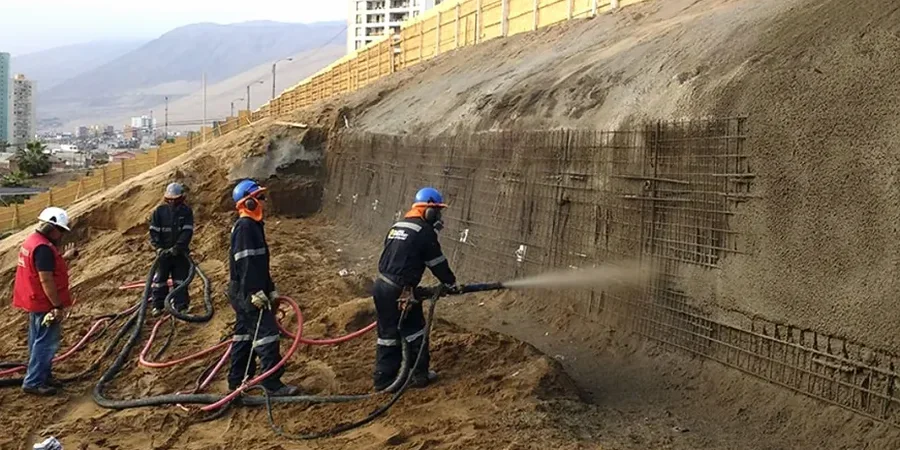
For parcels within Santa Rosa's designated landslide zones, we map head scarps, measure displacement with inclinometers, and design stabilization measures. Typical solutions include horizontal drains to depressurize the slide plane, reinforced shear keys at the toe, and soil nail arrays on oversteepened cuts.

Relevant standards

ASCE 7-22 Chapter 15 (Seismic Slope Stability), IBC 2021 Section 1613 (Earthquake Loads), ASTM D1586 (Standard Penetration Test), ASTM D2487 (Soil Classification), California Building Code Chapter 18 (Soils and Foundations), FHWA NHI-06-088 (Soil Slope and Embankment Design)

Questions and answers

Does the City of Santa Rosa require a slope stability analysis for my property?

Yes, if your parcel falls within a mapped landslide hazard zone or if you are proposing cuts and fills greater than 5 feet in height. The Santa Rosa Building Division enforces California Building Code Chapter 18 and the local hillside development ordinance. A geotechnical report with a signed stability analysis is required before grading permits are issued.

How do you account for the Tubbs Fire effects on slope stability?

The 2017 fire removed root reinforcement from surficial soils, leaving a layer of weakened colluvium that is highly susceptible to shallow debris flows during intense rainfall. We adjust our near-surface strength parameters downward for burned slopes and often recommend deepening the benched keyway or installing subsurface drains to intercept water before it reaches the burned zone.

What is the typical cost range for a slope stability analysis in Sonoma County?

For a single-family lot evaluation including drilling, laboratory testing, and the analysis report, costs typically range from US$1,290 to US$3,600. Complex sites with multiple cross-sections, inclinometer monitoring, or finite element modeling will be at the upper end or beyond that range.

What happens if the factor of safety falls below the code minimum?

We design a stabilization scheme to bring the factor of safety above the required threshold. Common remedies for Santa Rosa sites include regrading the slope to a flatter angle, installing horizontal wick drains to lower the groundwater table, constructing a reinforced soil berm at the toe, or using tieback anchors in competent bedrock. The report presents cost-comparable alternatives so the owner can select the best fit.
Location and service area

We serve projects in Santa Rosa and surrounding areas.

View larger map